Protests against police violence towards black population in the U.S.

FWIW. A retired senior military leader was interviewed today on PBS. He said: "If Pres [Littlehands] refuses to leave office after losing the election, the US military is obligated to help remove him from the premises and they will follow their obligation under the constitution".

I believe his statement is a premonition not conjecture.
 
JFK gave this speech 57 years ago tonight. As Joe Kennedy III pointed out, this part of the speech, as well as the parts where JFK says that "this is not a sectional issue" and also makes clear our complicity if we say and do nothing, could be read as if every word were describing the situation RIGHT NOW.
 
yea, this could be read as class privilege
but I guess to be white or black in the USA, really is about class

when the terminology gets exported to other countries, I see it losing its meaning to some degree.
there is nothing inherent about being "White" or "Black" that makes one privileged and the other not.
although I do see black people as extremely privileged when I'm at the beach worrying about getting sunburn.
 
All children. All unarmed. All murdered.

Nicolas Heyward.jpg

Nicholas Heyward was shot and killed by a police officer while playing cops and robbers with his friends in Gowanus. His last words were "We're playing."

Tamir Rice.jpg

Tamir Rice was shot and killed by a police officer while playing in a Cleveland park. The cop fired less than 2 seconds after arriving on the scene.

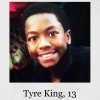
Tyre King.jpg

Tyre King was shot multiple times and killed by a police officer when they believed he matched the description for a robber in the neighborhood. He was 5ft tall and weighed less than 100 pounds. The robber being investigated had stolen $10.

Aiyana Stanley-Jones.jpg

Aiyana Stanley-Jones was shot and killed by a police officer when, while investigating a local shooting, they bust into her home without warning and fired within seconds. She was SLEEPING. She was SEVEN YEARS OLD. And the whole thing was getting filmed for a true crime TV show.

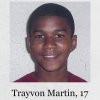
Trayvon Martin.jpg

Trayvon Martin was shot and killed by a neighborhood watch volunteer while walking home. The shooter claimed to act in self defense. Martin was holding a bag of Skittles and an Arizona Ice Tea.

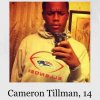
Cameron Tillman.jpg

Cameron Tillman was shot and killed by a police officer while hanging out with his friends in an abandoned house with the owner's consent. He was alive for at least 45 minutes. The officers offered no medical assistance.

Jordan Edwards.jpg

Jordan Edwards was shot and killed by a police officer in the passenger seat of a car while leaving a party. The car was driving AWAY from the cops and the officer fired inside the car under the grounds that the car had backed up towards him "in an aggressive manner."

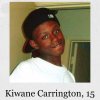
Kiwane Carrington.jpg

Kiwane Carrington was shot and killed by a police officer outside a house in broad daylight while the cop was investigating a suspected break in. Carrington was known to the house's owner and welcome there.

Laquan McDonald.jpg

Laquan McDonald was shot and killed by a police officer while under investigation for slashing a squad car's tires. He was shot SIXTEEN TIMES while walking AWAY from the officer.

DeAunta Farrow.jpg

DeAunta Farrow was shot and killed by a police officer while walking in the park. The officer claimed Farrow had a toy gun, while witnesses claimed he was holding a bag of chips.
 

The root cause as to why police brutality, abuse of power and murder never result in convictions of police officers in the US:

[cut/paste to bypass paywall]
**************************************************************************************************************
How different history might have been if a police bodycam or bystander’s cellphone had recorded the events of Nov. 12, 1984, outside a convenience store on West Boulevard in Charlotte.
At that time and place, Dethorne Graham, a diabetic African American man who worked repairing roads for the state, experienced an insulin reaction and rushed into the shop to get orange juice — then rushed back out when he saw the line at the cash register was too long.

He and a friend drove off, followed by a police patrol car. The officer inside, M.S. Connor, thought Graham’s hasty in-and-out was the behavior of a shoplifter.
Moments later, Graham and his companion had been pulled over. When Graham began behaving erratically because of illness, Connor and four other officers handcuffed him and shoved him into their car, as a crowd of onlookers gathered. The police cursed Graham and accused him of faking illness — until realizing their mistake and taking him home. With injuries including a broken foot, Graham sued the officers in federal court.

By 1989, Graham v. Connor had reached the Supreme Court — where the court’s ruling would establish legal standards for police brutality lawsuits that reverberate today.

Every police use of force since reflects law enforcement’s absorption of constitutional lessons the justices drew from the Charlotte police’s violent treatment of an innocent, desperately ill man. Training for police officers across the country — probably including Derek Chauvin of Minneapolis — teaches they can’t be sued if they behave in accordance with the holding of Graham v. Connor.
That holding, in an opinion written by Chief Justice William H. Rehnquist, is that courts should evaluate use of force under the Fourth Amendment, which governs “seizures” — not under the expansive “substantive due process” doctrine underlying liberal rulings such as Roe v. Wade and, later, Obergefell v. Hodges, the 2015 same-sex marriage case.

Courts should determine not whether the officer acted with malicious intent, as previous legal doctrine from lower courts had suggested, but whether he behaved “reasonably,” under the circumstances, Rehnquist wrote.
“Reasonable,” in turn, would not be determined in hindsight, or relative to a reasonable civilian’s view, but from the point of view “of a reasonable officer on the scene,” the chief justice said. Courts must bear in mind the cop-on-the-beat’s “tense, uncertain and rapidly evolving” world. As it happens, Connor was black; other officers on the scene, including one who slammed Graham’s face into his car hood, were white.
This formulation defers to law enforcement’s perspective, which is not surprising, given that President Richard M. Nixon appointed the conservative Rehnquist to the court in 1971 to undo restraints on police fashioned by the liberal Warren Court in the 1960s.

And in 1989, that was a popular objective: The violent crime rate was nearly twice what it is today, and rising. Responding like many other politicians to public anxiety, then-Sen. Joe Biden (D-Del.) faulted President George H.W. Bush’s drug-war plan because it didn’t “include enough police officers to catch the violent thugs.”
Graham’s lawyers and others thought Graham v. Connor might help plaintiffs by making it possible to prove police brutality without exploring the inherently murky issue of officer intent. On a court including liberal icons Thurgood Marshall, William J. Brennan Jr. and Harry A. Blackmun, the ruling in the case was 9 to 0, though those three expressed minor reservations in a brief concurring opinion.
However, Graham v. Connor did not prove a great help to police brutality victims, as Dethorne Graham himself quickly learned when the Supreme Court remanded his case to the district court for trial in North Carolina — and a jury found the police’s conduct reasonable. Similar results have occurred in case after case since, to the point where police now regard Graham as their legal shield.

As legal scholar Osagie K. Obasogie of the University of California at Berkeley has pointed out, Graham v. Connor’s police-friendly reasonableness test is, in practice, no less vague or manipulable than previous doctrine, while characterizing brutality claims as violations of the Fourth Amendment recasts them as one-off abuses, not systemic ones.
Reflecting such concerns after the police killing of Stephon Clark in Sacramento in 2018, a recent California law tightened deadly-force rules for that state.
Rehnquist’s opinion did not even mention race; it reported Graham’s injuries and distress, but in bare-bones language. That could not have happened if cellphone video and social media had existed in 1984.

A link between Graham v. Connor and today’s court is that Chief Justice John G. Roberts Jr. was a law clerk (and friend) both to Rehnquist and to the distinguished federal appeals court judge whose police brutality doctrine Rehnquist modified: Henry J. Friendly of New York.

Sooner or later, it will be the turn of Roberts and his colleagues to reshape constitutional law on police use of force. Technology and a mass social movement would seem to guarantee that, when the court does speak, it cannot be in the bloodless abstractions of Graham v. Connor.
*****************************************************************************************************************
 

The root cause as to why police brutality, abuse of power and murder never result in convictions of police officers in the US:

[cut/paste to bypass paywall]
**************************************************************************************************************
How different history might have been if a police bodycam or bystander’s cellphone had recorded the events of Nov. 12, 1984, outside a convenience store on West Boulevard in Charlotte.
At that time and place, Dethorne Graham, a diabetic African American man who worked repairing roads for the state, experienced an insulin reaction and rushed into the shop to get orange juice — then rushed back out when he saw the line at the cash register was too long.

He and a friend drove off, followed by a police patrol car. The officer inside, M.S. Connor, thought Graham’s hasty in-and-out was the behavior of a shoplifter.
Moments later, Graham and his companion had been pulled over. When Graham began behaving erratically because of illness, Connor and four other officers handcuffed him and shoved him into their car, as a crowd of onlookers gathered. The police cursed Graham and accused him of faking illness — until realizing their mistake and taking him home. With injuries including a broken foot, Graham sued the officers in federal court.

By 1989, Graham v. Connor had reached the Supreme Court — where the court’s ruling would establish legal standards for police brutality lawsuits that reverberate today.

Every police use of force since reflects law enforcement’s absorption of constitutional lessons the justices drew from the Charlotte police’s violent treatment of an innocent, desperately ill man. Training for police officers across the country — probably including Derek Chauvin of Minneapolis — teaches they can’t be sued if they behave in accordance with the holding of Graham v. Connor.
That holding, in an opinion written by Chief Justice William H. Rehnquist, is that courts should evaluate use of force under the Fourth Amendment, which governs “seizures” — not under the expansive “substantive due process” doctrine underlying liberal rulings such as Roe v. Wade and, later, Obergefell v. Hodges, the 2015 same-sex marriage case.

Courts should determine not whether the officer acted with malicious intent, as previous legal doctrine from lower courts had suggested, but whether he behaved “reasonably,” under the circumstances, Rehnquist wrote.
“Reasonable,” in turn, would not be determined in hindsight, or relative to a reasonable civilian’s view, but from the point of view “of a reasonable officer on the scene,” the chief justice said. Courts must bear in mind the cop-on-the-beat’s “tense, uncertain and rapidly evolving” world. As it happens, Connor was black; other officers on the scene, including one who slammed Graham’s face into his car hood, were white.
This formulation defers to law enforcement’s perspective, which is not surprising, given that President Richard M. Nixon appointed the conservative Rehnquist to the court in 1971 to undo restraints on police fashioned by the liberal Warren Court in the 1960s.

And in 1989, that was a popular objective: The violent crime rate was nearly twice what it is today, and rising. Responding like many other politicians to public anxiety, then-Sen. Joe Biden (D-Del.) faulted President George H.W. Bush’s drug-war plan because it didn’t “include enough police officers to catch the violent thugs.”
Graham’s lawyers and others thought Graham v. Connor might help plaintiffs by making it possible to prove police brutality without exploring the inherently murky issue of officer intent. On a court including liberal icons Thurgood Marshall, William J. Brennan Jr. and Harry A. Blackmun, the ruling in the case was 9 to 0, though those three expressed minor reservations in a brief concurring opinion.
However, Graham v. Connor did not prove a great help to police brutality victims, as Dethorne Graham himself quickly learned when the Supreme Court remanded his case to the district court for trial in North Carolina — and a jury found the police’s conduct reasonable. Similar results have occurred in case after case since, to the point where police now regard Graham as their legal shield.

As legal scholar Osagie K. Obasogie of the University of California at Berkeley has pointed out, Graham v. Connor’s police-friendly reasonableness test is, in practice, no less vague or manipulable than previous doctrine, while characterizing brutality claims as violations of the Fourth Amendment recasts them as one-off abuses, not systemic ones.
Reflecting such concerns after the police killing of Stephon Clark in Sacramento in 2018, a recent California law tightened deadly-force rules for that state.
Rehnquist’s opinion did not even mention race; it reported Graham’s injuries and distress, but in bare-bones language. That could not have happened if cellphone video and social media had existed in 1984.

A link between Graham v. Connor and today’s court is that Chief Justice John G. Roberts Jr. was a law clerk (and friend) both to Rehnquist and to the distinguished federal appeals court judge whose police brutality doctrine Rehnquist modified: Henry J. Friendly of New York.

Sooner or later, it will be the turn of Roberts and his colleagues to reshape constitutional law on police use of force. Technology and a mass social movement would seem to guarantee that, when the court does speak, it cannot be in the bloodless abstractions of Graham v. Connor.
*****************************************************************************************************************

Here is the fundamental issue with the Supreme Court ruling:
The standard for what is the perspective of a "reasonable officer" is determined by police officers !!!!!
But there is no way to know that the specific expert witness who testifies what is reasonable is in fact reasonable.

So here is an example from the scientific world that should guide how these situations should be handled:
1. Clinical laboratories test 100s of millions of patient samples every day worldwide.
2. Each and every clinical lab that tests for diseases that are life/death decisions and follows the appropriate intl regulations must use approved reference samples to confirm that their test method is still in a validated state.
3. The reference samples are prepared by reference labs. Reference labs do not test clinical samples in the same systems in which they qualify reference samples.
4. If a clinical lab were to prepare its own reference sample it would by definition not be valid as it is a circular reference. You cannot approve your test method by running your test method.

What does this mean for how to arrive at "reasonable" actions by a police officer ?
There would have to be a formal commission that evaluates behavior based on a large set of behavioral characteristics: Behavioral Psychology, Psychiatric Evaluations, Situational Options, the Severity of the Crime in progress (if any), Social Environment (possibly others). Based on this analysis, acceptable behaviors for an officer in a stress situation are established as reasonable behavior options.
 
Lord knows that there are so many approaches to correct, or at least improve the situation. However, the stark reality is that asking people of color to solve the problems of systemic racial discrimination is like asking women to solve the issues of sexual assault and gender discrimination.

The problem lies with the perpetrators, not the victims.
 
Wow! What have I been missing haha. I live in suburbia, and about the worst thing is there's a blond lady who's the mayor and she's into real estate and said some snitty things about the protesters and then they showed up at her house and gave her a hard time. Now there's a pretty strong candidate against her too. One time I wrote her a message saying that I didn't understand why her Facebook profile didn't feature her as being the mayor and instead featured her as being a real estate agent. She said being the mayor doesn't pay enough. I immediately decided she needs to go haha
 
yea, this could be read as class privilege
but I guess to be white or black in the USA, really is about class

when the terminology gets exported to other countries, I see it losing its meaning to some degree.
there is nothing inherent about being "White" or "Black" that makes one privileged and the other not.
although I do see black people as extremely privileged when I'm at the beach worrying about getting sunburn.

this is really well said. i saw something the other day that spelled it out pretty succinctly with this example. if a black baby is born to married parents who are lawyers, and a white baby is born to a single mother drug addict, does the white baby have privilege just because it's white? i think the answer is unequivocably "no."
 
this is really well said. i saw something the other day that spelled it out pretty succinctly with this example. if a black baby is born to married parents who are lawyers, and a white baby is born to a single mother drug addict, does the white baby have privilege just because it's white? i think the answer is unequivocably "no."

White privilege is how one is treated over the lifetime of an individual not just their condition when born.
 
A sensible man you be.
For those of you who do not live in the United States, let me share this with you. If you have paid attention, you have seen ad hominem comments in the thread attacking the victim, and comments disparaging the protesters. There is a very serious problem in the Untied States, and it is rooted in the need of some to maintain a hegemony at all costs. What you have seen here is just a tip of the iceberg of what they will do to paint Blacks as culpable for their insidious deeds. That do not want to take any responsibility, at all.

What this video for an idea of what the situation is.

 
Husband and wife conversation:
- Her: Do you love me?
- Him: I love everybody.
- Her: Huh!? I asked you if you love me!
- Her: Do I matter to you?
- Him: Everybody matters to me.
- Her: Huh!? I asked you if I matter to you!


Two random people chatting:
- Her: Black lives matter.
- Him: All lives matter.
- Her: Huh!?


As we see, in some contexts, saying “all lives matter” is a very insensitive thing to say. Or course, all lives matter! Yet, saying that in response to "Black lives matter," is telling about how people really feel.
Black lives Matter is the Same as Save the whales. It doesnt mean that all pther sea creatures arent important. It just means they are highest at risk.
 
yea, this could be read as class privilege
but I guess to be white or black in the USA, really is about class

when the terminology gets exported to other countries, I see it losing its meaning to some degree.
there is nothing inherent about being "White" or "Black" that makes one privileged and the other not.
although I do see black people as extremely privileged when I'm at the beach worrying about getting sunburn.

this is really well said. i saw something the other day that spelled it out pretty succinctly with this example. if a black baby is born to married parents who are lawyers, and a white baby is born to a single mother drug addict, does the white baby have privilege just because it's white? i think the answer is unequivocably "no."


As per current understanding and experiences of the term "white privilege" you are both completely wrong. In today's times what you write will be seen as invalidating a black person's lived experience. It is like saying a lady doesn't face or gets judged as a woman because she comes from a well-off background.

Yes there is "class privilege". It exists every where just like "gender privilege" also exists everywhere. The "race privilege" or its equivalent also exists in most countries and regions. In the USA (and generally in Americas) it is historical discrimination against the African descended people.

The "white privilege" is not only about the class.


There are many stories of how being a black is a different experience irrespective of your class. It is about how you are viewed, judged and treated by others solely due to the color of your skin. I don't know if there is any study of experiences of a lighter skinned black person vs darker skin black person. But if there is, I am fairly sure the lighter skinned ones would have far less negative experiences compared to the dark skinned.

In particular, of a person belonging or risen to the position of "class privilege" but being black, there are countless stories of being treated wrongly because of their skin color. There are few good articles explaining this. A highly accomplished black person may get treated differently within their "social" or "professional bubble", that is those who know them at work, socially, etc. But when they step out of that bubble, where they are not known, they face same experiences based on their skin color. In the USA context the examples are like being followed in the dept stores, being questioned if they belong in the high class neighborhood, "driving while black", the examples are countless. I think it is now being named/called as "living while black". Where some stranger or otherwise interferes in your normal routine activities to question or judge you based on your skin color.

The "white privilege" is about not having or facing the experiences that someone else faces or gets judged by based on the color of the skin.


Your examples are so wrong. There are many anecdotes from interracial couples as well as interracial adoptions where one of the parent or partner or child is challenged based on the color of the skin by strangers, restaurant/store workers, airline staff, who question either the relationship or treat the family member differently. Why do you think that happens?
 
Last edited:
As per current understanding and experiences of the term "white privilege" you are both completely wrong. In today's times what you write will be seen as invalidating a black person's lived experience. It is like saying a lady doesn't face or gets judged as a woman because she comes from a well-off background.

Yes there is "class privilege". It exists every where. The "race privilege" or its equivalent also exists in most countries and regions. In the USA (and generally in Americas) it is historical discrimination against the African descended people.

The "white privilege" is not only about the class.


There are many stories of how being a black is different experience irrespective of your class. It is about how you are viewed and treated by others.

In particular, of a person belonging or risen to the position of "class privilege" but being black, there are countless stories of being treated wrongly because of their skin color. There are few good articles explaining this. A highly accomplished black person may get treated differently when asking those who know them at work, socially, etc. But when they step out where there are not known they face same experiences where they get based on skin color. Like being followed in the dept stores, being questioned if they belong in the high class neighborhood, the examples are countless.

The "white privilege" is about not having or facing the experiences that some one else faces or gets judged by based on the color of the skin.


Your examples are so wrong. There are many anecdotes from interracial couples as well as interracial adoptions where one of the parent or partner or child is challenged based on the color of the skin by strangers, restaurant/store workers, airline staff, who question either the relationship or treat the family member differently. Why do you think that happens?
This
 
As per current understanding and experiences of the term "white privilege" you are both completely wrong.
I take it you didn't like what i said, but whats was WRONG about it? lol

the point i was making is that each country has its own unique history related to immigration, colonialism, slavery (or absence of). so what it actually means to be black or white in one country to another is quite different. I find that the USA for example seems to be obsessed with skin color, they never stop talking about it. not every country is like that. you have had a rough history, and the wounds are still very much unhealed

In today's times what you write will be seen as invalidating a black person's lived experience.
yes, because in today's times, more then ever, there are too many people not listening to each other.
too many people with a "if your not one of us, you are one of them" attitude.
so, no it wouldn't surprise me if someone made a totally unfounded assumption like that LOL

The "white privilege" is about not having or facing the experiences that someone else faces or gets judged by based on the color of the skin.
what are the criteria for being told you have white privilege then? if not skin color?

There are many stories of how being black is a different experience irrespective of your class. It is about how you are viewed, judged, and treated by others solely due to the color of your skin. I don't know if there is any study of experiences of a lighter-skinned black person vs darker skin black person. But if there is, I am fairly sure the lighter-skinned ones would have far less negative experiences compared to the dark-skinned.
are you referring to the USA specifically here?
you might be right
I would put it to you that prejudice is the core problem here, and this can have many excuses, in the case of the USA it is all about color, in other places it can be religion and so on.
 
Last edited:
Back
Top