
You are using an out of date browser. It may not display this or other websites correctly.
You should upgrade or use an alternative browser.
You should upgrade or use an alternative browser.
Old Salsa Photos Thread
- Thread starter AguaDulce
- Start date
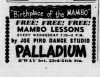
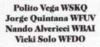 I need a translation for this as well. I assume for letter combination means it's an US radio station. But who are these people and what do they do?
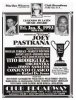
Also I noticed that some of the top artists are called patato and chocolate. Was there a trend at that time to name yourself after some kind of food?

DJ Yuca
Son Montuno
Polito Vega was a v successful radio DJ in NY. Specialising in salsa as far as I know. I assume the others were too and they would get paid to show their faces and maybe introduce the live acts. More importantly, I imagine they would mention it on their shows, which would reach lots of people.View attachment 4136 I need a translation for this as well. I assume for letter combination means it's an US radio station. But who are these people and what do they do?
Also I noticed that some of the top artists are called patato and chocolate. Was there a trend at that time to name yourself after some kind of food?
Chocolate and Potato were both Cubans who recorded in Cuba prior to the revolution and moved to the US. Patato is rated by some as the greatest conguero ever. His nickname was a reference to his stature.
I don't know how Chocolate got his nickname but it could have been a reference to his dark skin tone. I can't recall any other musicians with stage names referring to food, although they probably exist.


Richie Blondet
Son Montuno
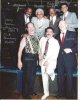
Some notables of the Latin American farandula surrounding Celia. Actor Rolando Barral holding the Mike, Pedro Knight, percussionist/timbalero Rudy Regalado, Tongelele, and to the extreme right with his face cut in half is Ralph Mercado.
Richie Blondet
Son Montuno
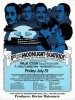
I attended this event. Although some of the "Guest Stars" were no shows. Which was a common thing in NYC before and during my time in the NY nightlife. People being advertised as being part of the feature but with no guarantee of they showing up. Not that this was clarified with the public. Same goes for a lot of those events in the 1960s where it reads 23 bands appearing at the Hunt's Point Palace. But only about 6 or 7 would show.
Richie Blondet
Son Montuno
View attachment 4136 I need a translation for this as well. I assume for letter combination means it's an US radio station. But who are these people and what do they do?
Also I noticed that some of the top artists are called patato and chocolate. Was there a trend at that time to name yourself after some kind of food?
Polito Vega goes back to the late 1950s as an intern and, in the '60s & '70s as a radio show host for a station located in the Bronx known as WBNX. In the '80s he was hired by WEVD radio, which was formerly owned by a Jewish outfit (WEVD was the former home of "Symphony Sid" Torin) but sold to a company called Spanish Broadcasting Systems [SBS, Inc. owned by Cuban-American Raul Alarcon] which changed its call letters to WSKQ and branded itself as "El Super KQ" (pronounced in Spanish by the Latinx community as "K'ah-K'oo"). By the 1990s the station WSKQ rebranded itself as "La Mega." It was during this period Polito hosted a popular classic old school "Salsa" radio program every Sunday. WSKQ was a commercial spanish language FM radio station.
WFUV and WFDU (The flyer has a typo) were both non-commercial College radio stations (owned by Fordham University). FUV was based in the Bronx and FDU is located in Teaneck, New Jersey.
WBAI is a non-commercial/commercial free member supported liberal-left-wing station operating near the South Street seaport area of lower Manhattan. All of the names mentioned were the hosts. Hernando "Nando" Albericci is a record/sound collector (he owns tge **** "Ricardo" Sugar record collection) who was also a master of ceremonies during the early 1980s for the "Salsa Meets Jazz" Series @ The Village Gate, as well as the live music booking director at S.O.B.'s during the 1990s. He also produced a public access television show revolved around his radio show "Con Sabor Latino." Simultaneously he, Mickey Melendez and the former Millie Melendez (nee Garcia) produced concerts throughout the 1980s, including one at Hunter College for Cachao (this was about 6 years prior to Andy Garcia's attempt at rebranding Cachao as the creator of "Mambo" in 1993) and the popular Latin Pianos series, which saw monster pianists of the era dueling one another (The Palmieri Bros, Hilton Ruiz, Michel Camilo, Papo Lucca, Richie Ray, Edy Martinez, etc) while backed by a super orchestra (Nixky Marrero, Andy Gonzalez, John "Dandy" Rodriguez, Giovanni Hidalgo, Pupi Legaretta, Jose Mangual, Jose "Chombo" Silva, Barry Rogers, Jimmy Bosch, Chocolate, etc). Nando continues to host a show on WBAI.
Polito just recently passed away. To my knowledge Jorge Quintana is no longer on radio. Leaving Vicki Solá and Nando as the two longest running radio host of Salsa specialty programming in the tri-state area. Chronologically speaking, with Polito's passing, Vicki is the new dean of Salsa radio in NY/NJ/CT.
Richie Blondet
Son Montuno
Chocolate and Potato were both Cubans who recorded in Cuba prior to the revolution and moved to the US. Patato is rated by some as the greatest conguero ever. His nickname was a reference to his stature.
Correct. The nickname also has some sort of religious connotation. With "Patato" being a kind of element in what is know as "Aña" in the Yoruban faith (what outsiders refer to as 'Sanreria') that can be transmitted to a tumbadora or "Conga" drum. But, overall, mainstream-wise, it's what you described. "Patato" = small stature.
I don't know how Chocolate got his nickname but it could have been a reference to his dark skin tone.
According to Alfredo "Chocolate" Armenteros he was named after a famous Afro-Cuban boxer from the 1930s who fought professionally in the USA. He went by the name of "Kid Chocolate." However the name itself ("Chcolate") alludes to his dark skin.
I can't recall any other musicians with stage names referring to food, although they probably exist.
If you listen to those old Dimension Latina recordings from the early 1970s with Oscar d'Leon as the principal vocalist, the lead trombonist of the orchestra, Cesar Monges was nicknamed "Albondiga." Which means "Meatball."
Off the top of my head no one else comes to mind. But, like you said, there surely more. There's also many nicknames related to animals and, especially, with derivative names converted to a more youthful version. Humberto Nieves, Ernesto Puente, and Pablo Rodriguez, among others, were all known as "Tito." (Humbertito, Ernestito & Pablito). Francisco or Frank Grillo, who was originally "Macho," is rechristened by a club booking director in 1940 as "Machito." Normally men named Francisco are often referred to as "Paco" or its younger alternative "Paquito." Although, like "Machito," percussionist Francisco Bastar was christened as "Kako." Carlos is usually "Chucho" in some Spanish speaking countries, while "Chuy" is associated with the name Jose in Mexican culture. One Puertorican musician named Joseph H. Madera was nicknamed "Pin." According to his eldest son, Jose, there was a popular radio show in Puerto Rico revolved around the French chef Jacques Pepin. Since Joseph is derived from the French Jacques he was nicknamed "Pepin" until, ultimately, the first two letters were dropped. Leaving him forever known as "Pin" Madera.
Don't ask me how Santi Gonzalez, bassist for Willie Colon & Hector Lavoe, acquired his nickname "Chomoflomo." I have no idea.

Richie Blondet
Son Montuno
I'm adding this video because I suspect there may be some curiosity about Killer Joe
For context, and as the advertisement you posted shows, "Killer Joe" Piro was a professional dance instructor in the 1950s & '60s. Although his dance story goes further back to the 1930s. Pirouette, an Italian American, was a resident of 125th Street and 2nd Avenue in East Harlem. He was a lindy/swing dancer first and often made his way to the Savoy ballroom. It was at the Savoy where he first became exposed to the "Rhumba" (aka 'Son'). He was drafted for WW2 but was luckily stationed in NY where the Manhattan docks were located (there was speculation that German U boats would sabotage or destroy military sea craft that was kept on the West Side docks). Upon being given "leave" he made his way to the Times Square area and danced at places like La Conga and the Havana Madrid (where he was first introduced as a dance instructor in 1949). He also danced a swing spots where he gsrnered a reputation for winning lindy contests. By 1950 he is at the Palladium as a dance instructor on Wednesday evenings. Eventually doubling as a Master of Ceremonies, introducing the bands. By the early 1960s he's known as the dance instructor to the stars (and affluent) and is gone from the Palladium (Marty Arret emerges as the new face at the Palladium doing dance promotions, etc) and working out of the Roseland ballroom. By the time the decade closes he rebranded himself as a modern discotheque personality for the high society crowds of the 1970s. The "Salsa" generation of dancers have zero connection to him and most are unaware of his connection to the Palladium and the Mambo Wars. Eventually a young collector named Henry Medina unearths a long lost film from a vault in Texas containing the now cult classic "Mambo Madness" from 1955. Where it shows Piro, and several other dancers from the era, dancing to the music of the Tito Rodriguez orchestra at the Palm Gardens ballroom. That's how my generation becomes "hip" to Killer Joe Piro and his association with what some dancers of a certain age in NY refer to as "Latin Dance."
For context, and as the advertisement you posted shows, "Killer Joe" Piro was a professional dance instructor in the 1950s & '60s. Although his dance story goes further back to the 1930s. Pirouette, an Italian American, was a resident of 125th Street and 2nd Avenue in East Harlem. He was a lindy/swing dancer first and often made his way to the Savoy ballroom. It was at the Savoy where he first became exposed to the "Rhumba" (aka 'Son'). He was drafted for WW2 but was luckily stationed in NY where the Manhattan docks were located (there was speculation that German U boats would sabotage or destroy military sea craft that was kept on the West Side docks). Upon being given "leave" he made his way to the Times Square area and danced at places like La Conga and the Havana Madrid (where he was first introduced as a dance instructor in 1949). He also danced a swing spots where he gsrnered a reputation for winning lindy contests. By 1950 he is at the Palladium as a dance instructor on Wednesday evenings. Eventually doubling as a Master of Ceremonies, introducing the bands. By the early 1960s he's known as the dance instructor to the stars (and affluent) and is gone from the Palladium (Marty Arret emerges as the new face at the Palladium doing dance promotions, etc) and working out of the Roseland ballroom. By the time the decade closes he rebranded himself as a modern discotheque personality for the high society crowds of the 1970s. The "Salsa" generation of dancers have zero connection to him and most are unaware of his connection to the Palladium and the Mambo Wars. Eventually a young collector named Henry Medina unearths a long lost film from a vault in Texas containing the now cult classic "Mambo Madness" from 1955. Where it shows Piro, and several other dancers from the era, dancing to the music of the Tito Rodriguez orchestra at the Palm Gardens ballroom. That's how my generation becomes "hip" to Killer Joe Piro and his association with what some dancers of a certain age in NY refer to as "Latin Dance."
Amazing. Sounds like he was quite a character. Thanks for the info.
Richie Blondet
Son Montuno
I've heard some of the names, but the only one I'm really familiar with is James Moody. The famous DJ from WBLS in NYC, Frankie "Hollywood" Crocker, would always end his show with "Moody's Mood For Love."
Richie Blondet
Son Montuno
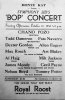
I've heard some of the names, but the only one I'm really familiar with is James Moody. The famous DJ from WBLS in NYC, Frankie "Hollywood" Crocker, would always end his show with "Moody's Mood For Love."
Tommy Potter, Nelson Boyd and Allan Eagers are three names that were probably known at time but don't stand out today. The rest are super Legends.
December 10, 1948 was two months away from this presentation at the Royal Roost that was to have been a Mega concert Chano was to have took part in at the Strand theater with the Dizzy Gillespie Big Band, Maxine Sullivan and the Deep River Boys (James Moody and Cecil Payne were members of the Gillespie orchestra). Unfortunately Chano met his tragic fate on the evening of December 2nd, 1948 at the Rio Cafe Bar & Grill. But the concert did take place with Luis "Sabu" Martinez holding down the Afro-Cuban percussion chair, in place of Chano.
BTW-As per the individual who confessed to murdering Chano his motive was self-defense. He claimed Chano had "lifted" (stolen) $15 from him and had threatened him with bodily harm. Eyewitness accounts documented by the NYPD throws a bit of shade or doubt at that account. While the man kbown for killing Chano confessed, he only received a 5 year sentence and was released from prison only 18 months later. Extremely peculiar considering g the death penalty was open for business in NY state. And if confessing thwarted a death sentence, surely a convicted murderer would have received 20+ years, like so many others charged with cold blooded murder during the era.