This instrumental was played at Live2Mambo festival, a tough one to dance to. Beginning and end are a firework of accents, one of these songs you are constantly thinking if better soloing or partnerwork. I found myself in the video fighting in the very background. Hearing it again I start getting the structure of the song better. Look at the faces of all people at the end - glad it's over, but what a good fight! Great song, if you like it demanding. Of course Shazam doesn't know it - anybody knows which song it is?

You are using an out of date browser. It may not display this or other websites correctly.
You should upgrade or use an alternative browser.
You should upgrade or use an alternative browser.
Complicated instrumental played at Live2Mambo Budapest
- Thread starter MamboJazz
- Start date

newandromeda
Changui
Al Delory - Floreando

This instrumental was played at Live2Mambo festival, a tough one to dance to. Beginning and end are a firework of accents, one of these songs you are constantly thinking if better soloing or partnerwork. I found myself in the video fighting in the very background. Hearing it again I start getting the structure of the song better. Look at the faces of all people at the end - glad it's over, but what a good fight! Great song, if you like it demanding. Of course Shazam doesn't know it - anybody knows which song it is?
I love dancing to this kind of music. Even when my feet are dead tired, I will try to grab the best follower and dance with a lot of footwork both during the partnerwork and solo.
perfect for 5am dancing when things are at the peak and only the hardcore dancers around.

DJ Yuca
Son Montuno
Al Delory - Floreando
I bought the album with this track on many years ago, for obvious reasons i.e. it also contains Vía, which was massive in the UK around 20 years ago. By the time I bought it, Vía had become a bit old hat, but I still was able to play it once or twice.
I never noticed the above track and didn't recognise it when I played the vid. Would I dance to it? Probably. Would I play it if I were DJing (I still have the CD)? Maybe. It seems to go down well in the vid.
One thing that I find off-putting is that the piano occasionally seems to allude to the tres golpes, but it's on the 3 side of the clave. Which was the norm many, many years ago, but certainly wasn't acceptable when this disc was made. As he's only (possibly) alluding to the tres golpes on piano and they're not actually played on the congas it could be classed as legal, but personally I would call the clave police.
Would I play it if I were DJing (I still have the CD)? Maybe. It seems to go down well in the vid.
The track would be wrong on the average local salsa social. But on this festival with a very high level of dancers it was a good choice and a nice challenge.
DJ Yuca
Son Montuno
Yes mambo/Latin jazz instrumentals in general are something I would only play in any quantity to a more confident audience that contains significant numbers of on 2 dancers.The track would be wrong on the average local salsa social. But on this festival with a very high level of dancers it was a good choice and a nice challenge.
But I'm still unsure about this track in particular, mainly due to the clave issue previously mentioned.
One thing that I find off-putting is that the piano occasionally seems to allude to the tres golpes, but it's on the 3 side of the clave. Which was the norm many, many years ago, but certainly wasn't acceptable when this disc was made. As he's only (possibly) alluding to the tres golpes on piano and they're not actually played on the congas it could be classed as legal, but personally I would call the clave police.
You seem to be conflating son and rumba clave
DJ Yuca
Son Montuno
You seem to be conflating son and rumba clave
That's irrelevant. Numerous salsa and Latin jazz tracks use the tres golpes aka the guaguancó conga pattern. In late 1950s Cuba the rumba drummers changed where the pattern went, from the 3 side to the 2 side. In a son the pattern would be on the same side of the clave as it would be in rumba.
Up until around 1980 it was still acceptable in the US to put the pattern on the 3 side of the clave, simply due to limited communication between Cuba and NY, although some NY percussionists were aware of the situation from the 1960s or earlier. This track is from '96 and therefore sounds a bit crossed to me. That piano riff would sound so much better on the 2 side of the clave.
Maybe I can chop it up successfully using Audacity.
This track is from '96 and therefore sounds a bit crossed to me.
Maybe it was intentional from the pianist, to refer to old-style playing?
I recall one blues band that used in their beginning years (late 1960s) intentionally worse recording technics to make it sound dirtier like their favourite 1940s blues singers.
DJ Yuca
Son Montuno
The conflation is in automatically matching 3-2 son clave to 3-2 rumba clave. There's an argument to be made that 3-2 rumba clave corresponds more immediately to 2-3 son clave. This complicates translating developments in guaguancó to salsa.
There's no complication whatsoever: if a conga player plays the tres golpes on the 3 side of the clave, the band leader will not be happy. If the conga player does it again he will probably get sacked.
It's pretty much a unanimous opinion nowadays that playing the pattern on the 2 side is loads better. If a band is covering an old track that originally featured the outdated tres golpes placement, it's better to update it. Even someone as ridiculously old school and retro as I am can see that the old way of doing it sounds dated and corny now.
Last edited:
DJ Yuca
Son Montuno
Maybe it was intentional from the pianist, to refer to old-style playing?
I recall one blues band that used in their beginning years (late 1960s) intentionally worse recording technics to make it sound dirtier like their favourite 1940s blues singers.
I very much doubt that is what happened on this track, for reasons mentioned in the previous post.
Which blues band was that?
I recall one blues band that used in their beginning years (late 1960s) intentionally worse recording technics to make it sound dirtier like their favourite 1940s blues singers.
Which blues band was that?
Hard to believe but later pop band Fleetwood Mac was this raw blues band. You can listen into "Hellhound on my trail" to hear what I mean.
Big matter of discussion, after all those years. There is numerous Cuban percussion players teaching Guaguanco with the tres golpes on the three side, usually with the point: "as it was originally and should be correctly". I think it's up to anyone to decide. However, jazz/Mambo context also offers other types of freedom. Personally, I see your point but I find it ok and not disturbing in this context.There's no complication whatsoever: if a conga player plays the tres golpes on the 3 side of the clave, the band leader will not be happy. If the conga player does it again he will probably get sacked.
Guaguanco is the most important o f the Rumba genres and is the most accepted, practiced and
preferred by both dancers and musicians. It is a couples dance of seduction with the male dancer
gracefully trying to seduce his female partner, who avoids his every move until, when she is not
expecting it, he “vaccinates her” , a symbolic gesture called the Vacunão. Guaguanco is performed
on three drums: the tumbador (lowest), the segundo (middle), and the quinto (highest), which has
an extensive solo vocabulary, responding to the singers and dancers in a complex polyrhythmic
framework guided by the clave, which outlines the time cycle, and the cata (a bamboo tube) that
reinforces the clave as well as defining the downbeats.
---
The old Havana style of Guaguancó is less syncopated than the second version, a busier style of playing that started in the 1960's which uses slaps to fill in and around the tumbador part, emphasizing the "a" and downbeat of three.
The new Rumba, Guarapachanguero, is the most syncopated of the Guaguancó rumbas, and is a departure from the traditional rumba rhythm. In essence, the tumbador is playing the old segundo part while the segundo part is moved over to the "a" of three and the "e" of four. Since the tumbador part is a two bar phrase, the "answer" happens every two bars in response to the Segundo part. This is a unique change in the Guaguancó, and although there are variations where the "answer" happens every bar, the two bar phrase is very popular and practiced throughout Cuba.
Much has been written about the differences between the Havana and Matanzas Guaguancó. Many authors and musicians have defined the Matanzas style as the open third beat in the segundo part; that can only be thought of as a starting point for the player to improvise around. While sorne Matanzas Guaguancó may begin in this manner, this author has never heard a segundo player maintain that part without variations throughout a rumba in a live performance. The Matanzas Guaguancó is really one style with many variations within it, a rumba that has maintained itself throughout its long and colorful history.
Old Havana
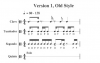
New Havana
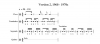
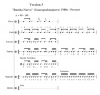
Matanzas
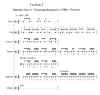
There you go, of course, there are many variations, but that's it from the "Cuba" side.
If you want more, I have a book I publish (written by Robert Fernandez) or I can post a few more variations (I'm not on here to sell the book though, but if you are interested, just ask.)
preferred by both dancers and musicians. It is a couples dance of seduction with the male dancer
gracefully trying to seduce his female partner, who avoids his every move until, when she is not
expecting it, he “vaccinates her” , a symbolic gesture called the Vacunão. Guaguanco is performed
on three drums: the tumbador (lowest), the segundo (middle), and the quinto (highest), which has
an extensive solo vocabulary, responding to the singers and dancers in a complex polyrhythmic
framework guided by the clave, which outlines the time cycle, and the cata (a bamboo tube) that
reinforces the clave as well as defining the downbeats.
---
The old Havana style of Guaguancó is less syncopated than the second version, a busier style of playing that started in the 1960's which uses slaps to fill in and around the tumbador part, emphasizing the "a" and downbeat of three.
The new Rumba, Guarapachanguero, is the most syncopated of the Guaguancó rumbas, and is a departure from the traditional rumba rhythm. In essence, the tumbador is playing the old segundo part while the segundo part is moved over to the "a" of three and the "e" of four. Since the tumbador part is a two bar phrase, the "answer" happens every two bars in response to the Segundo part. This is a unique change in the Guaguancó, and although there are variations where the "answer" happens every bar, the two bar phrase is very popular and practiced throughout Cuba.
Much has been written about the differences between the Havana and Matanzas Guaguancó. Many authors and musicians have defined the Matanzas style as the open third beat in the segundo part; that can only be thought of as a starting point for the player to improvise around. While sorne Matanzas Guaguancó may begin in this manner, this author has never heard a segundo player maintain that part without variations throughout a rumba in a live performance. The Matanzas Guaguancó is really one style with many variations within it, a rumba that has maintained itself throughout its long and colorful history.
Old Havana
New Havana
Matanzas
There you go, of course, there are many variations, but that's it from the "Cuba" side.
If you want more, I have a book I publish (written by Robert Fernandez) or I can post a few more variations (I'm not on here to sell the book though, but if you are interested, just ask.)
Great! Is this from the Book? Looks fantástic!Guaguanco is the most important o f the Rumba genres and is the most accepted, practiced and
preferred by both dancers and musicians. It is a couples dance of seduction with the male dancer
gracefully trying to seduce his female partner, who avoids his every move until, when she is not
expecting it, he “vaccinates her” , a symbolic gesture called the Vacunão. Guaguanco is performed
on three drums: the tumbador (lowest), the segundo (middle), and the quinto (highest), which has
an extensive solo vocabulary, responding to the singers and dancers in a complex polyrhythmic
framework guided by the clave, which outlines the time cycle, and the cata (a bamboo tube) that
reinforces the clave as well as defining the downbeats.
---
The old Havana style of Guaguancó is less syncopated than the second version, a busier style of playing that started in the 1960's which uses slaps to fill in and around the tumbador part, emphasizing the "a" and downbeat of three.
The new Rumba, Guarapachanguero, is the most syncopated of the Guaguancó rumbas, and is a departure from the traditional rumba rhythm. In essence, the tumbador is playing the old segundo part while the segundo part is moved over to the "a" of three and the "e" of four. Since the tumbador part is a two bar phrase, the "answer" happens every two bars in response to the Segundo part. This is a unique change in the Guaguancó, and although there are variations where the "answer" happens every bar, the two bar phrase is very popular and practiced throughout Cuba.
Much has been written about the differences between the Havana and Matanzas Guaguancó. Many authors and musicians have defined the Matanzas style as the open third beat in the segundo part; that can only be thought of as a starting point for the player to improvise around. While sorne Matanzas Guaguancó may begin in this manner, this author has never heard a segundo player maintain that part without variations throughout a rumba in a live performance. The Matanzas Guaguancó is really one style with many variations within it, a rumba that has maintained itself throughout its long and colorful history.
Old Havana
View attachment 4417
New Havana
View attachment 4418
View attachment 4420
Matanzas
View attachment 4421
There you go, of course, there are many variations, but that's it from the "Cuba" side.
If you want more, I have a book I publish (written by Robert Fernandez) or I can post a few more variations (I'm not on here to sell the book though, but if you are interested, just ask.)
the Type of Rumba I was referring to is prior to the 60ties, it switched at some point in the 50ties. I think it was @DJ Yuca who pointed this out to me some years ago. And some Cubans refer to that Guaguanco as “the original one”.
I would be curious if you can ask some of your Cuban friends if they heard from this and what they think about that matter. Really curious!!!
Yes, it's from a book, I'll send you a copy when I get back home Friday. Remind me if I forget.Great! Is this from the Book? Looks fantástic!
the Type of Rumba I was referring to is prior to the 60ties, it switched at some point in the 50ties. I think it was @DJ Yuca who pointed this out to me some years ago. And some Cubans refer to that Guaguanco as “the original one”.
I would be curious if you can ask some of your Cuban friends if they heard from this and what they think about that matter. Really curious!!!
In no way I am accepting! I buy it! And please, SF members: His books are amazing, all first hand from Cuban resources and tresero is an expert himself. If you’re interested in Cuban music, I beg you to support those who produce valuable didactic material, there’s no money in this activity.Yes, it's from a book, I'll send you a copy when I get back home Friday. Remind me if I forget.
Buy his books! Trasero, if you want to post a link to your online store - I won’t do it without your permission.