African-American Jazz Helped Create the Foundation of Salsa Music

My post was a response to your post quoted above. I've already provided numerous examples that exemplified that Disco music was part of the foundation of Hip Hop in the 70s. The last video I posted with GM Caz, someone that you've referenced, provided another example of Hip Hop using Disco as a musical element in its development rather than, in your words, a "contrarian response to Disco."

And it was. The Disco I'm referring to is what Hustle dancers were expressing themselves to in the latter half of the '70s. Thus the HipHop generation, when the elements are defined as HipHop, and the culture is KNOWN as HipHop, we're expressing thexalternativectobthe popular Disco culture that was mainstream. You keep stressing that these dj's you're touting as HipHop founders because they were spinning early Disco recordings or funk. They had nothing to do with bringing all the elements of HipHop together. Bam did. I don't care that a majority only recognize DJ'ing and Rap as HipHop. If they do they're not from NYC during the era it emerged in and are ignorant about HipHop's defining cultural makeup. Which may not be relevant to a Gen Z'er, but cannot be erased to placate cultural outsiders.
 
And it was. The Disco I'm referring to is what Hustle dancers were expressing themselves to in the latter half of the '70s.

Thanks! This is why I asked you way back what YOU consider to be Disco. Let me break it down for you. This is a Disco song released in 1977 that people used to Hustle to (in the 1st video). In the second video is the same song being cut up Hip Hop style like it was back in the day (a mild version.) This song was also popular when Disco roller-skating was in (video 3).

I remember having cassettes with this song being cut up back in the day. Again, this illustrates the point I've already made about Disco being used to develop Rap music.


Also, to further beat a dead horse, this Rap song was heavily influenced by the Disco song and also has been credited as a sample

"We Got Our Own Thang" - Sampled James Brown "Funky President", James Brown "My Thang", CJ & Co "We Got Our Own Thing"
 
What music did 70s hip hop DJs play? Breakbeats. And breakbeats are found in funk, disco, rock, jazz, pop, electronic and all sorts of other genres. But when a hip hop DJ plays a breakbeat, it usually doesn't sound anything like the tune when played start to finish.

For example one of the best breaks is Stilletto by Billy Joel. Only 8 bars of the track were used by hip hop DJs, none of which even feature Billy Joel's vocals, so to think that old school hip hoppers were Billy Joel fans would be misunderstanding what was happening. And on Thin Lizzy's Johnny the Fox (another big one), as I recall it's only 5 bars that were ever played.

Disco music had breaks galore. So did rock. In fact there were probably even more rock breaks than disco. Either way, when hip hop DJs used these tracks, they made them sound very funky.

If anyone wants to know more, check out the Ultimate Breaks and Beats discs, comps focusing purely on popular breaks from the original hip hop old school: https://www.discogs.com/label/807847-Ultimate-Breaks-Beats

Or listen to Bambaataa Death Mix: a bootleg recording of Bam and Jazz Jay DJing in 1979. The music is pure breakbeats:

 
Last edited:
What music did 70s hip hop DJs play? Breakbeats. And breakbeats are found in funk, disco, rock, jazz, pop, electronic and all sorts of other genres. But when a hip hop DJ plays a breakbeat, it usually doesn't sound anything like the tune when played start to finish.

For example one of the best breaks is Stilletto by Billy Joel.

Agree 100%. If you only play a certain part of a song, it will sound different than playing the whole song. I remember Stiletto. I think it was released in October of 1978.

Non Hip Hop DJs were also extending the "get down" part of the song and it sounded different than if one played the entire song. This was pretty common. I gave the example below of Bra from 1972, which was later used by DJs like Flash and the numerous other Hip Hop DJs

 
Last edited:
The way Willie expressed it to me the terms "Black" or "Latin" Hustle did not exist. It was just "Hustle." His generation was into Rocking. And, in a pursuit to express new moves, the moves associated with the more famous "Hustle" were developed. The term "Latin hustle" came later.

Interesting, in Billy Fajardo's description of the "evolution of hustle," he mentions that the syncopation is something that Hustle inherited from Mambo. He also demonstrates what looks like an Open Break and says when that Mambo got incorporated into Hustle, it became the Latin Hustle. He also describes how it went from Latin Hustle back to Hustle.

 
Actually Jazz was formed out of Afro-Cuban music. Music influences music and evolves, but Cuban music before it was known as Salsa in New York was also was part of the formation of Jazz. Jazz music was born out of the habanera. A ferry twice a day between New Orleans and Havana brought musicians back and forth daily that were influenced by one another. The origins of Afro-Cuban jazz date from the early 20th century. The abolition of slavery in Cuba in 1886 gave origin to a large migration from the island into New Orleans. A process of cultural exchange began that led to a mixture of musical instruments and styles.
It was a fusion between the musicians in New Orleans and Havana that gave birth to modern day jazz.
Jazz started in New Orleans, but before Jazz was even Jazz and in its early stages of development in the 1800’s it was a fusion of sounds between Big Band musicians in New Orleans and Havana. It was not called Cuban Jazz in Cuba, this was a term coined by Afro-Cubans in New York City in the 1940’s and is a sub-genre of jazz.

Afro-Cuban influence: African-American music began incorporating Afro-Cuban rhythmic motifs in the 19th century when the habanera (Cuban contradanza) gained international popularity. Musicians from Havana and New Orleans would take the twice-daily ferry between both cities to perform, and the habanera quickly took root in the musically fertile Crescent City. John Storm Roberts states that the musical genre habanera "reached the U.S. twenty years before the first rag was published." For the more than quarter-century in which the cakewalk, ragtime, and proto-jazz were forming and developing, the habanera was a consistent part of African-American popular music.

Habaneras were widely available as sheet music and were the first written music which was rhythmically based on an African motif (1803). From the perspective of African-American music, the "habanera rhythm" (also known as "congo"),"tango-congo", or tango can be thought of as a combination of tresillo and the backbeat. The habanera was the first of many Cuban music genres which enjoyed periods of popularity in the United States and reinforced and inspired the use of tresillo-based rhythms in African-American music.
New Orleans native Louis Moreau Gottschalk's piano piece "Ojos Criollos (Danse Cubaine)" (1860) was influenced by the composer's studies in Cuba: the habanera rhythm is clearly heard in the left hand.   In Gottschalk's symphonic work "A Night in the Tropics" (1859), the tresillo variant cinquillo appears extensively. The figure was later used by Scott Joplin and other ragtime composers.

Comparing the music of New Orleans with the music of Cuba, Wynton Marsalis observes that tresillo is the New Orleans "clavé", a Spanish word meaning "code" or "key", as in the key to a puzzle, or mystery. Although the pattern is only half a clave, Marsalis makes the point that the single-celled figure is the guide-pattern of New Orleans music. Jelly Roll Morton called the rhythmic figure the Spanish tinge and considered it an essential ingredient of jazz.

The Black Codes outlawed drumming by slaves, which meant that African drumming traditions were not preserved in North America, unlike in Cuba, Haiti, and elsewhere in the Caribbean. African-based rhythmic patterns were retained in the United States in large part through "body rhythms" such as stomping, clapping, and patting juba dancing.

In the opinion of jazz historian Ernest Borneman, what preceded New Orleans jazz before 1890 was "Afro-Latin music", similar to what was played in the Caribbean at the time. A three-stroke pattern known in Cuban music as tresillo is a fundamental rhythmic figure heard in many different slave musics of the Caribbean, as well as the Afro-Caribbean folk dances performed in New Orleans Congo Square and Gottschalk's compositions (for example "Souvenirs From Havana" (1859)). Tresillo (shown below) is the most basic and most prevalent duple-pulse rhythmic cell in sub-Saharan African music traditions and the music of the African Diaspora.

Tresillo is heard prominently in New Orleans second line music and in other forms of popular music from that city from the turn of the 20th century to present. "By and large the simpler African rhythmic patterns survived in jazz ... because they could be adapted more readily to European rhythmic conceptions," jazz historian Gunther Schuller observed. "Some survived, others were discarded as the Europeanization progressed."

In the post-Civil War period (after 1865), African Americans were able to obtain surplus military bass drums, snare drums and fifes, and an original African-American drum and fife music emerged, featuring tresillo and related syncopated rhythmic figures. This was a drumming tradition that was distinct from its Caribbean counterparts, expressing a uniquely African-American sensibility. "The snare and bass drummers played syncopated cross-rhythms," observed the writer Robert Palmer, speculating that "this tradition must have dated back to the latter half of the nineteenth century, and it could have not have developed in the first place if there hadn't been a reservoir of polyrhythmic sophistication in the culture it nurtured."
 
Didn't jellyroll Morton use the hemiola pattern but on piano? I would say Cuban is an unsung progenitor of jazz
 
It was a fusion between the musicians in New Orleans and Havana that gave birth to modern day jazz. Jazz started in New Orleans, but before Jazz was even Jazz and in its early stages of development in the 1800’s it was a fusion of sounds between Big Band musicians in New Orleans and Havana. It was not called Cuban Jazz in Cuba, this was a term coined by Afro-Cubans in New York City in the 1940’s and is a sub-genre of jazz.

This is the only statement of your post that I would respectfully disagree with. While the popular narrative of how Jazz comes to pass has always been, and continues to be, a development spawned in New Orleans, based on the elements you describe, of musicians from Cuba intermingling with musicians from New Orleans, the exact same mixture and exchange between musicians from Cuba finding their way into "Black" musical spaces in a city like New York, was also taking place simultaneously in the 1880s-1890s.

99% of Jazz scholarship trace the origins of Jazz to New Orelans and are basing it on the very same interaction you describe. The Cuban presence in NYC was large in latter day 19th century. They were the 2nd largest spanish speaking community in NY (trailing only the Spanish-American community). By the late 1910s decade, Cubans became the spanish speaking majority in NYC. Musicians such as Pastor Peñalver, who arrived from Havana to NYC circa the late 1870s, would years later become a founding member of the New Amsterdam Musical Association. An organization that included Jim Europe, William Tyers, Ford Dabney, Gene Mikell, Will Marion Cook, Noble Sissle, Leonard Jeter, and scores of other important African American musicians of the early 20th century.

If by simply co-existing with one another produced what would eventually evolve into Jazz, wouldn't a city like New York, with both it's Afro Cuban and African American population in the 19th century, also have been an incubator for early Jazz or pre-Jazz development, through it's local musical artistry?
 
That sounds logical to me! I had an argument recently with someone on a forum who were a part of the FBA/ADOS cult stating that Jazz came out of New Orleans and was created by African Americans only! That Cubans had nothing to do with it. All music in the United States was only created by African Americans. That Afro-Cubans stole Jazz from African Americans and later created Cuban-Jazz. Obviously this person knows nothing. Jazz wouldn’t be Jazz without the component from Afro-Cubans and Cuban-Jazz was not created out of theft nor was Salsa, the ignorance out there is baffling and scary.
 
I also read something about the contribution of Mexican brass bands in the whole thing. And however, the element of Native American singing in blues is still ignored by many. As in some other music styles mainly from Latin America. AND another moment to question the term of “African Americans” used only in US context. It makes me sick! America is a continent and most African Americans are outside of the US.
 
That sounds logical to me! I had an argument recently with someone on a forum who were a part of the FBA/ADOS cult stating that Jazz came out of New Orleans and was created by African Americans only! That Cubans had nothing to do with it. All music in the United States was only created by African Americans. That Afro-Cubans stole Jazz from African Americans and later created Cuban-Jazz. Obviously this person knows nothing. Jazz wouldn’t be Jazz without the component from Afro-Cubans and Cuban-Jazz was not created out of theft nor was Salsa, the ignorance out there is baffling and scary.

I used to go st them, first on twitter when I had an account there before it became "X," and then on YouTube. But it became tiring because they would always flip flop. Like you said they believe U.S. born African Americans created ALL music. But when you bring up musical forms like Calypso or Tango, they veer left to point out that the roots are of African descent. Contradicting their own agenda and going back to Africa when it's convenient. The other issue is these Mo'Fo's just don't read or don't want to read. Everything with them is video receipts. This one kid who calls himself "Dr. No Job" was adamant that I prove to him with VIDEO that the Apollo theater up in Harlem ran as a Spanish theater twice a week (every Sunday, and later Saturday & Sunday), simultaneously to when it was a Burlesque house. No amount of photographic imagery or newspaper clippings was going to convince him. There had to be film or video. You're wasting time with people whose sole argument is to "Show me the video." He even questioned if Puerto Ricans shot up U.S. Congress on Capitol Hill. Again, show me the video.

This is a really ignorant generation we have tossing their two cents on social media. Imagine how dumb the U.S. was previously without the internet? No wonder the nation was on auto-pilot. The only sources of ready information being provided was the corporate news media.

Tariq Nasheed (FBA Messiah) is just a modern day "Father Divine." ADOS is like an inverted Stockholm Syndrome. They rep U.S. African-American-born citizens and argue their land, culture, and bodies were stolen by the "Napkin People," as theyrefer to Caucasians. But they're pro-Trump.

You can't make this stuff up.
 
I had an argument with a Latino online over the LeBron James mountain dew commercial.
He said it was cultural appropriation. I questioned the logic, listing off the African loan words, African religious names and rhythms, instruments created, clave etc. Pointing out NYC influences.
He said black Latinos don't identify themselves as black, so it's Latino music. Then he said African Americans can keep their hip hop. Salsa is for Latinos.
So I would say it is selective common knowledge
Remember reading something on these spaces or somewhere else about African Americans and Latinos crossing over in the 60s/70s; the former joining salsa bands and the latter contributing to r&b/funk/disco records or releasing them in their own right. Definitely something to discuss in a new thread.
 
Remember reading something on these spaces or somewhere else about African Americans and Latinos crossing over in the 60s/70s; the former joining salsa bands and the latter contributing to r&b/funk/disco records or releasing them in their own right. Definitely something to discuss in a new thread.
That isn't or wasn't a phenomenon that first emerged in the 1960s/70s. The "crossing over" you describe in the 60s/70s was a carry over of previous generations of U.S. born Americans of African heritage, and those born in the Caribbean, Latin America or U.S. of African or European heritage or descent, who spoke french or spanish. Every generation in a city that had a spanish speaking citizenry and an African diasporic population experienced this.
 
Man, what an interesting discussion—a lot to think about!

That said, in the long run, isn't it all a matter of lots of people influencing lots of other people, one way or another, or both?

We can try to break music down into general categories, styles, sub-styles... Work it out geographically, historically, etc. But despite all our influences, each of us is an individual artist who, ideally, brings something individual with our music that no one else—even others who consider themselves to be playing the exact styles we are—has brought to the table.

Isn't that why it's such an awesome thing, and why we want to hear and play music at all? Just saying. Cheers!
 
Remember reading something on these spaces or somewhere else about African Americans and Latinos crossing over in the 60s/70s; the former joining salsa bands and the latter contributing to r&b/funk/disco records or releasing them in their own right. Definitely something to discuss in a new thread.
Riffing on this even further, I strongly, STRONGLY recommend everyone with an interest in such crossover accounts to read
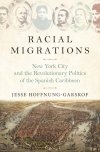
Racial Migrations: New York City and the Revolutionary Politics of the Spanish Caribbean by Dr. Jesse Hoffnung-Garskof. One of the hippest scholarly studies on the subject of U.S. African-American and African diasporic peoples from the spanish speaking Americas and Caribbean during the turn of the century in New York city, New York. Although the book is not centrally focused on music, the subject of music is present and plays a significant role in the formation of a new community, or neoDiaspora. Where spanish-speaking Afro-Antilleans, French or Patois-speaking West Indians and English-speaking African Americans who migrated to the north-east and along the Eastern seaboard from the "Jim Crow" South, co-existed, shared political ideologies, formed Masonic lodges, and danced to each other's musical heritages, inside safe spaces during a time in the borough of Manhattan's history when a "Black" population could be found living on Lower Broadway, the West Village, and the Times Square district. Before the city of New York managed to uproot them all through slum clearance laws and their architect of gentrification, Robert Moses.

One theme of this book illustrates how New Orleans was not the only city in the 19th century that had people of the Caribbean & Latin America intermingling with U.S. born citizens of African heritage/descent. New York city simultaneously had the same elements, pre-20th century. So the concept or notion of African Americans and Latinos crossing over into each other's worlds during the 1960s & 1970s has a much longer trajectory in the United States.

A synopsis of the book reads: The gripping history of Afro-Latino migrants who conspired to overthrow a colonial monarchy, end slavery, and secure full citizenship in their homelands. In the late nineteenth century, a small group of Cubans and Puerto Ricans of African descent settled in the segregated tenements of New York City.

If you want to be hip . . . get this book. 1000015809.jpg
 
Back
Top