So, how is this different from son? (except for step geometry, which is more salsa than son).For instance, this guy says: "it's not exactly On1, neither On2 but on the rhythm"
Someone put a comment on his video and he repeated the quote above .
Sometimes, I wonder if there are different things called contratiempo.

You are using an out of date browser. It may not display this or other websites correctly.
You should upgrade or use an alternative browser.
You should upgrade or use an alternative browser.
Etymology of the term contra tiempo, why contra tiempo = on2
- Thread starter SoFloW
- Start date

granrey
Son Montuno
So, how is this different from son? (except for step geometry, which is more salsa than son).
I think there are different meanings for the term in Salsa. I have a hard believing contratiempo dance and Son is the same thing for most people.
granrey
Son Montuno
I found this link very interesting:
 afrolatinodance.com
It seems cubans call On3: "A tiempo"
P2 as we all know is On1 delayed by a beat.
Contratiempo is basically P2.
On3 is P2 a beat behind.
If you use blended secuence on On1, P2 and On3, they will all have the "break step" with a duration of 2 beats. These 3 secuences are the same, just delayed by beats.
This leaves On2ET as the weirdo (lol) in the family with the "walk step" being 2 beats.
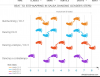
AfroLatino Dance Company | Latin Dance Classes & Shows in Toronto
AfroLatino Dance Company - Toronto's premier Latin dance studio offering Salsa, Samba, Bachata classes and professional dance shows for hire.
afrolatinodance.com
It seems cubans call On3: "A tiempo"
P2 as we all know is On1 delayed by a beat.
Contratiempo is basically P2.
On3 is P2 a beat behind.
If you use blended secuence on On1, P2 and On3, they will all have the "break step" with a duration of 2 beats. These 3 secuences are the same, just delayed by beats.
This leaves On2ET as the weirdo (lol) in the family with the "walk step" being 2 beats.

SoFloW
Son Montuno
In practical application P2 and ET2 are more similar than you think. If ET2 is reversed (as is sometimes seen, purposefully and unintentionally) the only difference is you take the 1 with the right foot instead of the 8 going forward, and 5 with the left foot going back instead of 4. In reality people step anywhere between 8 and 1 going forward, like on 8&, depending on what they're doing. Also if the music is fast the lines become blurred. It's all the same thing in the end. It matters only as a teaching system which you ditch when you really start dancing. Learn the rules to break the rules.
Last edited: