
You are using an out of date browser. It may not display this or other websites correctly.
You should upgrade or use an alternative browser.
You should upgrade or use an alternative browser.
Counting a little differently with Captain Salsa
- Thread starter Tom Schueler
- Start date


granrey
Son Montuno
Without ever knowing him or watching his video, I have been sometimes crossing on forward basic for a long time as many other dancers.
May be something lost in translation. He may not have meant he invented it.
Well, I admit that most likely I misunderstood what he said. but you can see the post below as well as tread in which it happened.
Btw, the conversation started because he was explaining a P2 secuence without saying it was a P2 secuence.
Now that I look back it was actually one of his friends who made the invention comment.
My apologies.
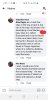
You can also see the tread here

DJ Yuca
Son Montuno
I just had a little look at the group Secrets of Salsa. It contains some bizarre statements that I can't make any sense of. For example:
When TWO congas are used, the tumbaos played on them are ideal and most common for 2/3 clave music - perfect for advanced On2 as well as Palladium dancers.
This is in contrast to when one conga is used, on which the tumbao played is what's most popular and common for 3/2 clave music (perfect for on1 dancers) and standard 2/3 clave music like Salsa-Romantica, which is perfect for technical On2 dancers (123 567 or 8n1 23 4and5 67 - no change in dynamics in the second measure.
What?
When TWO congas are used, the tumbaos played on them are ideal and most common for 2/3 clave music - perfect for advanced On2 as well as Palladium dancers.
This is in contrast to when one conga is used, on which the tumbao played is what's most popular and common for 3/2 clave music (perfect for on1 dancers) and standard 2/3 clave music like Salsa-Romantica, which is perfect for technical On2 dancers (123 567 or 8n1 23 4and5 67 - no change in dynamics in the second measure.
What?
Interesting. As I understand, he learned salsa in NY. However :
- the move he calls single right turn is what FM calls basic right turn
- the move he calls double right turn looks different than the move FM calls double right turn
What a mess ...
You know there are no standardized terms in salsa. I think right turn or outside turn is borrowed from BR?
This is just wrong.I just had a little look at the group Secrets of Salsa. It contains some bizarre statements that I can't make any sense of. For example:
When TWO congas are used, the tumbaos played on them are ideal and most common for 2/3 clave music - perfect for advanced On2 as well as Palladium dancers.
This is in contrast to when one conga is used, on which the tumbao played is what's most popular and common for 3/2 clave music (perfect for on1 dancers) and standard 2/3 clave music like Salsa-Romantica, which is perfect for technical On2 dancers (123 567 or 8n1 23 4and5 67 - no change in dynamics in the second measure.
What?
It‘s like saying „If Susan‘s brother has a moustache it means whoever has a moustache is Susan‘s brother“.
But you know that, of course. Just expressing I agree.
You know there are no standardized terms in salsa. I think right turn or outside turn is borrowed from BR?
Yeah, but since he learned salsa from NY guys, which supposedly made him a salsa expert, one would expect him to use the same technique and terminology. In the video we discussed in other thread, he actually demoed double right turn NY style with a follower
I BR, right turn is usually named "natural turn". I don't think that term "outside turn" is used in BR (there is "outside spin" in BR standard, but meaning of "outside" for that figure is different - it means that the lady steps "outside partner" although in closed hold at the beginning of the turn)
Last edited:
DJ Yuca
Son Montuno
This is just wrong.
It‘s like saying „If Susan‘s brother has a moustache it means whoever has a moustache is Susan‘s brother“.
But you know that, of course. Just expressing I agree.
Exactly. It's so wrong I'm not even going to go into why it doesn't make sense. And that's from the FB group that is set up to impart knowledge from the experts. Looks to me like they don't have a clue what they're talking about. Which is fine except I imagine there must be some poor souls in the group who actually assume they know what they're talking about and try to make sense of their nonsense.
Yeah, but since he learned salsa from NY guys, which supposedly made him a salsa expert, one would expect him to use the same technique and terminology. In the video we discussed in other thread, he actually demoed double right turn NY style with a follower
To the best I can tell there is no consistent terminology usage among NY instructors. Not even among instructors who were peers and students of ET during the same period. 90% of NYC instructors come from ET lineage, either ET’s student or someone who was.
English can be tricky. If you replace “invent” in that comment with “use”, then you will get right meaning of the comment. The comment is further clear if you replace the word “track” with “follow”.
Exactly. It's so wrong I'm not even going to go into why it doesn't make sense. And that's from the FB group that is set up to impart knowledge from the experts. Looks to me like they don't have a clue what they're talking about. Which is fine except I imagine there must be some poor souls in the group who actually assume they know what they're talking about and try to make sense of their nonsense.
Was it an expert who made the original comment or someone else discussing another comment made by an expert?
Shouldn't be a problem for someone who is an expert, as there are no 100 names for the same move either ...
Did FM in that video at all pointed out what wouldn’t be difference between a double right (as he meant) and a double spin. I don’t remember him explaining that difference. If I were to conclude/intuit on own by watching the breakdown of steps of those multiple turns, I ‘think’ I know. I said ‘think’, because I don’t know if FM has similar distinction in mind.
Last weekend Marina when dancing was doing all the multiple turns, similar to the way FM was using the “double turn” terminology. I happen to observe it by sheer accident. I don’t know if she considers them spins or turns. I should have asked her! I am now kicking myself for not. Didn’t occur to me.
granrey
Son Montuno
Btw, can you watch the way Captain salsa does his basic secuence?English can be tricky. If you replace “invent” in that comment with “use”, then you will get right meaning of the comment. The comment is further clear if you replace the word “track” with “follow”.
It seems to me, he thinks his way of dancing is very unique as he makes his forward break step two beats long (by crossing the left foot over the right foot) but on his rear secuence he holds the breaking step by making it a single beat.
He seems to think is very unique.
Did FM in that video at all pointed out what wouldn’t be difference between a double right (as he meant) and a double spin. I don’t remember him explaining that difference. If I were to conclude/intuit on own by watching the breakdown of steps of those multiple turns, I ‘think’ I know. I said ‘think’, because I don’t know if FM has similar distinction in mind.
Last weekend Marina when dancing was doing all the multiple turns, similar to the way FM was using the “double turn” terminology. I happen to observe it by sheer accident. I don’t know if she considers them spins or turns. I should have asked her! I am now kicking myself for not. Didn’t occur to me.
Well, I actually don't care much about terminology as I said several times. However, it would be fine that people making videos named 30 basic steps of on2 that they published on youtube (unlike FM video that was published by one of the workshop attendant) are more careful about this ...
just my 0.02
You know there are no standardized terms in salsa. I think right turn or outside turn is borrowed from BR?
Natural and Reverse (R and L )

Captain salsa has some videos about: "cadencia". I have watched the entire series and could not understand what he is referring to.
Cadencia (in my Spanish) refers to moving the hips (caderas). Which pretty much is the Cuban motion of moving the hips while dancing salsa.
I would be extremely careful when watching those videos, especially when they relate to timing.
Here is a video from that cadencia series where Mek has invited someone to give a workshop in Rumba. She starts singing with Rumba Clave as all Rumba instructors do. Mek talks over her timing and starts to sing his 8, and 1, counting... (which is the same timing he uses in the OP video about Bachata).
I've timestamped when he starts going into his counting over the Rumba instructor's counting...
Contrary to what he states, this is NOT a better way to count, especially in Rumba. He even says this is a better way to count for Cuban dancers. WTF... No it isn't.
I am not an expert in Rumba, but everything Mek says here doesn't hold up. You will not get as good a feel for Rumba counting the way Mek does compared to dancing to Clave.
The OP was about Bachata. How you can just apply the same timing convention to Rumba makes absolutely no sense. It's a completely different dance, completely different feel, completely different rhythm....
Just.... NO.
It gets really absurd around 14:10 when he starts counting very loudly over the music.
Last edited:
DJ Yuca
Son Montuno
Was it an expert who made the original comment or someone else discussing another comment made by an expert?
It was Mek who wrote that nonsense and posted it as a comment. Later he posts a video making similar claims and a pro musician advises him:
Sorry but it’s misleading to say that the one drum Tumbao is in 3-2 clave and so it’s for On1 dancers. The one drum Tumbao does not indicate clave direction. The only time that can be determined is if the rhythm is played on two drums.
Technically, the clave is not made for the dancer, whether On1, On2 or any other timing. The Clave’s role is to tie in all of the rhythms in the music. Dancers can take advantage of that principle to lock into the timing (better felt, in my opinion, On2) just like all of the instruments making the dancer an unwritten instrument in all Afro-Cuban song styles.
Mek's response is more foolishness:
You have absolutely correct - because I was not clear in my post
When one conga is used, the tumbao played on it is what's most popular for 3/2 clave music (perfect for on1 dancers) and 2/3 clave music (perfect for technical On2 dancers). When TWO congas are used, the tumbaos played on it are what are most popular for 2/3 clave music - perfect for advanced On2 as well as Palladium dancers.
To which Josué responds:
Great that you clarified, my friend! I'm so proud of you for continually seeking a deeper connection to the music!
These guys actually make the rest of the salsa scene look well-informed.