I would need examples to understand how that makes a style transition. Sound or musical charts in case you have some.3 over 2 feeling. Listen to an old habanera.
I was always told son and Danzon were kinda parallel and then some influences to eachother (more son into Danzon)

You are using an out of date browser. It may not display this or other websites correctly.
You should upgrade or use an alternative browser.
You should upgrade or use an alternative browser.
Co-opting of the "mambo"
- Thread starter opm1s6
- Start date

Richie Blondet
Son Montuno
I have to almost with the other nm poster.
mug youbhear Chinchullo, it is basically the predecessors Oye combo va, which a lot of people consider a chahchachá. But chanchullo is considered onebof the last danzon -mambos.
With all due respect, a lot of folks are uneducated brother. Especially in the U.S. And their B.S. spills into the internet. With wacky classifications and hagiographies published to Wikipedia and other websites that make Foghorn Leghorn sound like a Rhodes Scholar. Listen to a real danzon Mambo. Like Isora Club. And then listen to Chanchullo. The latter has zero structure related to danzon-mambo. Like "Oye Como Va" it is a Son Montuno. While many people consider it Cha Cha Cha, they also consider music expressed as Son Montuno and Guajira as Cha-Cha-Cha. Because that's as far as they know.
Yet it sounds like what most call a chachis.
A what'sis?
Also from I was told (by old Cubans and even in Cuba), is Danzon and Son are separate entities. Danzon coming from the contradanse transition (with hemiola). Mambo was when they added the son elements (like guajeos etc). But still played in orquestra Tipicas
The original Danzon is a distinct dance music form. But once it evolves into a Danzon-Mambo, which is how every danzon is expressed to this day since its initial emergence, the danzon-mambo is cut from the Son tree.
Richie Blondet
Son Montuno
I'm really enjoying this back and forth but I'm feeling like I'm not fully equipped to understand the intricacies of your arguments and thus really learn it. Are there resources you can point me to?
Yes. It's called music. Go to youtube and trust your ears. Not what Wikipedia or what "many people" say. The music shows you what it is. People just have a tendency to louse that up.
Richie Blondet
Son Montuno
Yep, what the majority here calls Mambo, is really, New Yorican Salsa. Mambo it's not.
This is mambo
I doubt very much that what a generation of orchestras from 1943 to 1963 were playing New Yorican Salsa when they interpreted a Mambo. What does that mean anyway? It's Afro Cuban music interpreted by musicians who reside in New York. Some of whom were not New Yorican. Just New Yorkers. Most of whom were influenced by Jazz. The professional ones, at least.
To me SF is a great source for details and nuances of how things evolved. There are different perspectives, some scholastic level discourse and information, examine things from different angle. This you can’t find in any book or articles due to SF’s interactive nature. As a repository of knowledge on the dance and music, it is worth going through old threads.
Full acknowledgement. So I beg that SF admins have functioning database backups in case of some server crash some day.
Again, not MamboI doubt very much that what a generation of orchestras from 1943 to 1963 were playing New Yorican Salsa when they interpreted a Mambo. What does that mean anyway? It's Afro Cuban music interpreted by musicians who reside in New York. Some of whom were not New Yorican. Just New Yorkers. Most of whom were influenced by Jazz. The professional ones, at least.

That was my point. Like TP, Jr, the term is loosely thrown around to represent Afro Cuban Son-based music. It's not being used in the technical sense.
I mightily disagree. Mambo is a subgenre of Son. Danzon IS Son. Another subgenre. The concept of Mambo does not begin within the 'Mambo' section of the danzon. It was used as a device to amplify the danzon, as a result of the popular dissemination of North American Jazz on Cuban soil. Or so said Antonio Arcaño, the late ensemble leader whose members included the Lopez brothers (Jesus & Israel). The first Mambo in the musical sense was reportedly by Bebo Valdes. Who led an orchestra. His band, like Arcano's tipica, was riffing off of Arsenio Rodriguez's conjunto. Who introduced the "Mambo" concept of the Son rhythm under multiple brass phrasing of repetitive notes over and over, that highlighted individual improvisation. There was nothing technically or conceptually related to Mambo in the history of the danzon until 1938, when Arcaño y sus Maravillas extended the danzon with the 'Mambo' section. Becoming more progressive and allowing for instrumental improvisation. The same exact phenomena emerged earlier within the bolero-Son. Where, like the danzon, a bolero was interpreted at a certain tempo and, eventually, became more progressive (sped up). While that isn't part of the popular narrative (re:bolero son), recording examples demonstrate it to precede the Mambo concept within the danzon.
That's your opinion but I don't see how you substantiate Mambo & Cha-Cha-Cha as being quite similar. In what way?
With the exception of "Guaracha," all Afro-Cuban genres are of the same expressive phenomena as they don't all have lyrical content, or don't have to, in order for them to be interpreted as such.
So did many others preceding El Benny. Like Miguelito Valdes, Orlando "Cascarita" Guerra, Frank "Machito" Grillo, and others. Benny More continued that tradition. He was no innovator. But he stood out talent-wise.
One individual or entity that escapes the Mambo origins conversation is pianist/arranger Rene Hernandez. Listen to his arrangements in the early 1940s, specifically for the Julio Cuevas orchestra. It's quite literally the same sound as Damaso Perez Prado's later work in the late 1940s.
Danzon existed long before Mambo, so there's that. First known danzon was Las Alturas de Simpson, written in 1879.
And yes, mambo is evolved from Danzon, as well as cha-cha-cha. Compare the basslines, percussion etc. Son came from Santiago/Guantanamo not the big cities. Not from "legit" musicians, i.e. trained players. Danzon did.
Of course, the mambo of the 40's and 50's sometimes used components of the now popular son/son-montuno, but as I pointed out in my video above, the "mambo" doesn't really have a ton of "son" influence. But, we can agree to disagree.

1derpalm
Son Montuno
Word.Danzon existed long before Mambo, so there's that. First known danzon was Las Alturas de Simpson, written in 1879.
And yes, mambo is evolved from Danzon, as well as cha-cha-cha. Compare the basslines, percussion etc. Son came from Santiago/Guantanamo not the big cities. Not from "legit" musicians, i.e. trained players. Danzon did.
Of course, the mambo of the 40's and 50's sometimes used components of the now popular son/son-montuno, but as I pointed out in my video above, the "mambo" doesn't really have a ton of "son" influence. But, we can agree to disagree.
1derpalm
Son Montuno
No offence taken. I’m just throwing in my 2 cents for what it’s worth. As far as the Danzon and son thing at least. I try not to use Wikipedia but interviews or ask old people It’s not. A debate hill I will die on however. At least during the arguments someone wil post a song I’ve never heard before and I’ll add it to my list.With all due respect, a lot of folks are uneducated brother. Especially in the U.S. And their B.S. spills into the internet. With wacky classifications and hagiographies published to Wikipedia and other websites that make Foghorn Leghorn sound like a Rhodes Scholar. Listen to a real danzon Mambo. Like Isora Club. And then listen to Chanchullo. The latter has zero structure related to danzon-mambo. Like "Oye Como Va" it is a Son Montuno. While many people consider it Cha Cha Cha, they also consider music expressed as Son Montuno and Guajira as Cha-Cha-Cha. Because that's as far as they know.
A what'sis?
The original Danzon is a distinct dance music form. But once it evolves into a Danzon-Mambo, which is how every danzon is expressed to this day since its initial emergence, the danzon-mambo is cut from the Son tree.
Full acknowledgement. So I beg that SF admins have functioning database backups in case of some server crash some day.
Yea I have been saying that for years. It is worth having multiple backups. Since 99% of content is text and links, the backup size might at most be a few gigabytes.
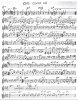
Like "Oye Como Va" it is a Son Montuno.
Oye Como Va is not a son. It is a cha-cha-chá.
He said Son Montuno, not Son - I heard that makes a difference, although I'm not sophisticated enough to differentiate that.
From a pragmatic view for me as a dancer I can be happy if I find someone on a salsa floor to dance chachacha to it (most haven't learned it nowadays). Only super dancers may insist on Son Montuno, but I never experienced that.
For me groove and emotionally it's is very different. Like radically different emotions. But I'm not sure there are many others that go with that. There are few though.From a pragmatic view for me as a dancer I can be happy if I find someone on a salsa floor to dance chachacha to it (most haven't learned it nowadays). Only super dancers may insist on Son Montuno, but I never experienced that.
It doesn't, and son montuno is an even later development than son.He said Son Montuno, not Son - I heard that makes a difference, although I'm not sophisticated enough to differentiate that.
From a pragmatic view for me as a dancer I can be happy if I find someone on a salsa floor to dance chachacha to it (most haven't learned it nowadays). Only super dancers may insist on Son Montuno, but I never experienced that.

Cuban Son Complex: Traditional Music from Eastern Cuba | Salsa Blanca Publishing
Learn about Cuban son, the foundational genre from Oriente de Cuba. Discover traditional instrumentation, clave patterns, and modern styles like timba and songo
salsablanca.com
It doesn't, and son montuno is an even later development than son.
Cuban Son Complex: Traditional Music from Eastern Cuba | Salsa Blanca Publishing
Learn about Cuban son, the foundational genre from Oriente de Cuba. Discover traditional instrumentation, clave patterns, and modern styles like timba and songosalsablanca.com
This blog was written in 2012 with “audio …coming soon”
 most people can’t understand music notations. Would have been good to have audio to accompany this type of blogs.
BTW there are discussions of various genres of the music over the years on SF with plenty of good history and knowledge. One of the best threads was

Cha-Cha vs Son Montuno vs Guajira vs Boogaloo? Musical Differences
Okay, as threatened a couple of weeks ago... I've been meaning to start a thread like this for a while... It is a subject that some people occasionally comment on that many (if not most) dancers can't tell the difference between Cha-Cha music and slow Son Montunos, or between Cha-Cha and...
www.salsaforums.com
There are other threads on Son Montuno too.

DJ Yuca
Son Montuno
Oye Como Va is not a son. It is a cha-cha-chá. There should be no real discussion about this from a musical point of view.
Listen to the piano part, and the cha bell.
View attachment 4428
I agree it's a cha cha cha - although certainly not one of TP's best - but can you identify that from the sheet music?
DJ Yuca
Son Montuno
Yep, what the majority here calls Mambo, is really, New Yorican Salsa. Mambo it's not.
Mambo more than anything refers to NY music from the 40s through to late 50s: TP, Machito, Tito Rodríguez and numerous others. Do you believe such music is not mambo it's actually NY salsa?
Mambo more than anything refers to NY music from the 40s through to late 50s: TP, Machito, Tito Rodríguez and numerous others. Do you believe such music is not mambo it's actually NY salsa?
“salsa” label for music didn’t exist in 50s. So if someone was arguing in 50s or 60s that it is not mambo, what would they then call it?
